Blog · Competitive Edge Combat Sports
no gi jiu jitsu: what to wear, how grips change the game, and a safe start
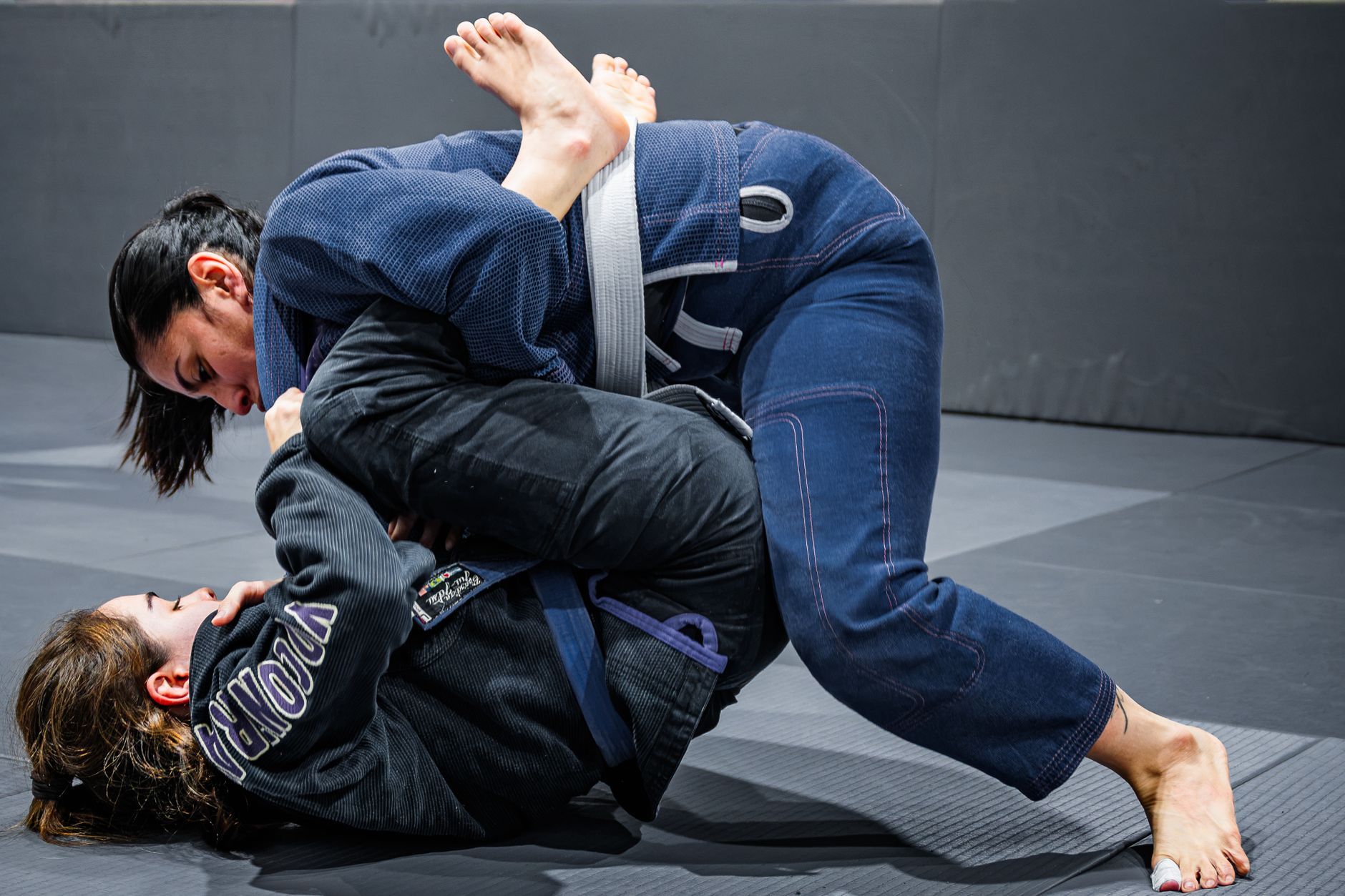
For no gi jiu jitsu, wear a fitted rash guard and board shorts without pockets, use body grips like underhooks instead of fabric, and start clean and focused for a safe first class. No-Gi is Brazilian Jiu-Jitsu without the kimono. It feels faster, rewards body positioning, and carries over well to self-defense. We teach both styles here, and beginners are welcome.
What is no gi jiu jitsu, and how does it differ from the gi?
No gi jiu jitsu is Brazilian Jiu-Jitsu practiced without the traditional kimono, known as a Gi. You cannot grab clothing, so control relies on body grips and positioning. The pace often feels quicker, with more scrambles and wrestling influence compared to Gi training, where lapel and sleeve grips slow and anchor exchanges.
In No-Gi, your main tools are underhooks and overhooks, wrist control, head position, body locks, hip control, and leg entanglements. The International Brazilian Jiu-Jitsu Federation, or IBJJF, governs both Gi and No-Gi rulesets in competition. Wikipedia’s overview describes BJJ as a grappling art focused on positional control and submissions.
On the mats here in Florence, SC, we let beginners feel both styles early. You will notice how fabric grips in Gi create friction and stalls, while No-Gi demands tighter body-to-body control and sharper movement.
Gi vs No-Gi for a beginner
| Aspect | Gi | No-Gi | What it means for beginners |
|---|---|---|---|
| Grips | Lapel and sleeve grips | Underhooks, overhooks, wrist and head control | Learn fabric-based handles in Gi, body ties in No-Gi |
| Pace | More methodical with friction | Faster with more scrambles | Expect slower setups in Gi, quicker transitions in No-Gi |
| Gear | Gi jacket, pants, belt | Rash guard, board shorts, optional spats | Different uniforms, same core positions and submissions |
| Learning curve | Grips can help slow and study | Emphasizes positioning and timing | Both are beginner friendly, consistency beats the choice |
What should I wear and bring to my first No-Gi class?
Wear a fitted rash guard and board-style grappling shorts with a drawstring and Velcro. Avoid pockets, zippers, buttons, or metal parts. Spats, which are compression pants, are optional. All athletes should wear brief-type undergarments. Arrive with clean gear, short fingernails, and no jewelry for safety.
For competition, the IBJJF specifies No-Gi rash guards in black, white, or black and white, with at least 10% belt rank color, and allows shorts in black, white, black and white, and belt rank colors. Shorts must not have pockets or exposed fasteners, and the length must be above the knee yet cover at least halfway down the thigh. These are good training baselines too.
Women can wear board shorts or spats under a rash guard. A mouthguard is optional, and many athletes prefer one for protection.
What to bring checklist:
- Fitted rash guard, clean and dry
- Board-style grappling shorts with drawstring and Velcro, no pockets or zippers
- Optional spats or compression shorts
- Brief-type undergarments
- Water bottle and small towel
- Mouthguard if you use one
We welcome beginners and the first class is free. If you are unsure about gear, show up with clean athletic wear and we will guide you.
How do grips change technique and strategy in No-Gi?
Without fabric, you replace sleeve and lapel grips with underhooks, overhooks, head control, wrist control, and body locks. That shifts your strategy toward off-balancing through angles, frames, and hip position. Transitions happen faster, so you build timing in scrambles and learn to win small battles like inside ties and head position.
Examples you will feel quickly: instead of a lapel grip to break posture, you frame on the collarbone and win head position. Instead of a sleeve to start a guard attack, you catch the wrist and elbow line. Passing often favors pressure, leg pummeling, and leg entanglements to trap hips. Escapes lean on frames, wedges, and turning your hips early since you cannot slow someone with cloth.
Here, we coach grip alternatives with specific drills. You might run sets of pummeling for underhooks, two-on-one wrist control sequences, and front headlock entries that teach posture breaks without fabric. This builds the instincts you need in No-Gi.
Is No-Gi useful for self-defense, and can beginners start with it?
Yes. No-Gi maps well to real life because you are not relying on a uniform. Techniques center on clinch control, takedowns, pins, and escapes that work regardless of clothing. Beginners can start in Gi or No-Gi, and consistency across weeks and months matters more than which you pick on day one.
In No-Gi you practice common self-defense positions like breaking headlocks, controlling bear hugs, and standing up safely. The faster pace also teaches you to scramble back to your feet and manage distance. Both styles complement each other, so you can switch or combine them over time.
At Competitive Edge Combat Sports, we teach both Gi and No-Gi for kids, teens, and adults, plus practical self-defense. If your goal is real-world skills, No-Gi gives you clinch reps and body control that carry over well.
How do I get started at Competitive Edge Combat Sports in Florence, SC?
A typical beginner No-Gi class here starts with a focused warm-up, then drilling a key control or escape, followed by positional rounds. Expect clear coaching on grips and safety. We offer Brazilian Jiu-Jitsu in Gi and No-Gi for all ages, Self Defense, and Pee Dee Fitness conditioning. Your first class is free.
We are at 111 Technology Place. On your first visit, arrive a few minutes early so we can show you the space and help with gear. If you have questions about Gi versus No-Gi, we will help you pick the first class that fits your goals and schedule.
Message us on WhatsApp to claim your free trial. We keep it simple, start with fundamentals, and build your base step by step.
- Train in loose clothing with pockets, zippers or exposed fasteners
- Wear a cotton t-shirt as your main training top
- Skip basic hygiene, like washing gear and covering open skin
- Train with jewelry or watches that can catch or cut
Train safely
- Open skin lesions, rashes or signs of infection: stop training and see a clinician, per CDC guidance on skin safety
- New, sharp joint pain or swelling after a session, which may indicate an injury
- Fainting, severe dizziness or breathing trouble during training
No-Gi builds sharp timing, body control, and clean fundamentals that carry over to self-defense and Gi. If you live near Florence and want a clear, safe start, come train with us. Message us on WhatsApp at (843) 269-6190 to claim your free trial, and see our Brazilian Jiu-Jitsu program page here: Brazilian Jiu-Jitsu in Florence.
References
- IBJJF Rule Book and No-Gi Uniform Requirements - ibjjf.com
- IBJJF Uniform Guidelines - ibjjf.com
- Brazilian jiu-jitsu, overview - en.wikipedia.org
- CDC, MRSA and Athletes - cdc.gov
Published by Competitive Edge Combat Sports, Florence, SC. Last updated September 22, 2026.