Blog · Competitive Edge Combat Sports
self defense bjj: Is BJJ the best choice for real-world safety?
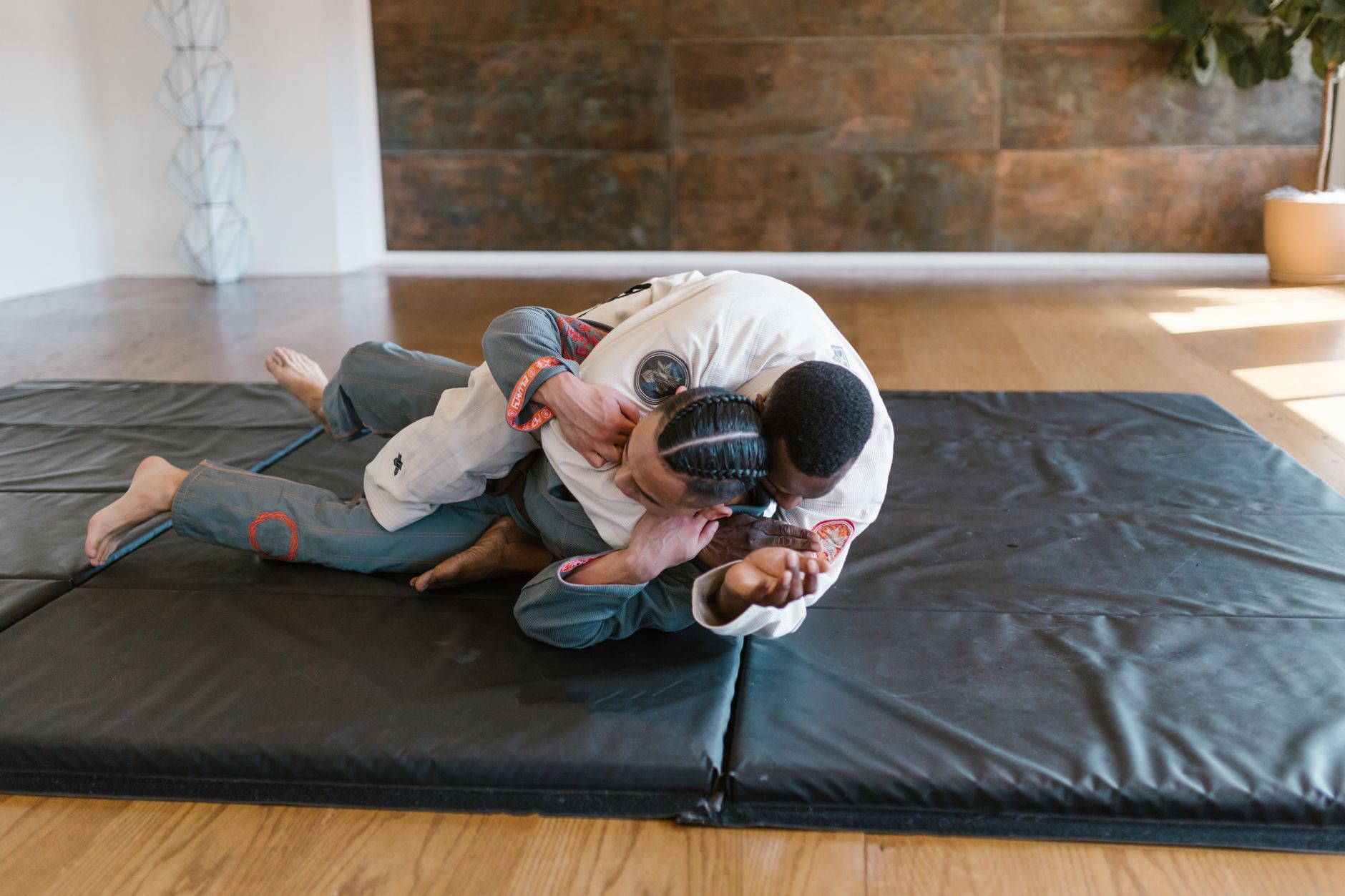
No single style is the best for self defense, and BJJ is strongest when paired with awareness, simple striking, and solid fitness. BJJ gives you reliable control and escapes at close range. Striking creates space. Wrestling decides where the fight takes place. Your goal is to stay safe and get out.
Self defense is about choices under pressure. You need a plan that covers distance, clinch, and ground, plus conditioning to keep moving. Below is a clear breakdown of how BJJ, striking, wrestling, and fitness fit together for real situations.
Is there a single best martial art for self-defense?
No. Self defense is context dependent, so range, environment, clothing, and the presence of bystanders change what works. Grappling dominates at close range. Striking helps you manage distance. Wrestling lets you decide if you stay standing or go to the ground. Your priority is escape, not winning a duel.
Think in ranges.
- Far: awareness, footwork, and simple strikes help you avoid the clinch.
- Clinch: wrestling skills decide who stays upright.
- Ground: BJJ controls position and ends the threat with the least damage.
We coach students to move between these ranges with purpose. Make space when you can leave. Tie up and control when you cannot. A balanced plan covers all three.
Quick comparison: how different approaches help or limit you in a self-defense situation
| Martial art or approach | Strengths for self-defense | Limitations | What to practice first |
|---|---|---|---|
| BJJ / grappling | Control on the ground, leverage over size, submissions or restraint without excess harm | Closing distance risks strikes, ground is risky with multiple people or hard surfaces | Technical stand-up, mount control, side control, and escapes from mount and back |
| Boxing / striking | Distance management, interrupts aggression, creates space to exit | Harder in clinch or on the ground, overcommitting can unbalance you | Footwork and guard, jab-cross, cover-and-move, exit on angles |
| Wrestling | Takedowns and clinch control, decide where the fight happens | Limited submissions on the ground without BJJ follow-up | Safe breakfalls, stance and sprawl, pummeling, one high-percentage takedown |
| General fitness | Endurance, strength, balance, faster recovery and joint support | Not a technique system, needs pairing with skills | Functional strength, mobility, interval cardio or sprints |
How does self defense BJJ help in real-life confrontations?
BJJ helps by using leverage, positional control, and submissions to neutralize a bigger person. As the Wikipedia overview of Brazilian Jiu-Jitsu explains, the art focuses on taking an opponent down, advancing to a dominant position, and using joint locks or chokeholds to finish or control without unnecessary harm.
Typical street problems are close range. Grabs, tackles, and trips are common. BJJ gives you frames, clinch entries, takedowns, and a positional roadmap: guard, half guard, side control, mount, back control. From there, you can hold, escape, or finish.
Limits exist. Closing distance exposes you to strikes, and staying on the ground is risky if another person is present. We teach students to control, check surroundings, and stand up when safe.
In beginners class, we start with positional control. For example, hold mount with grapevines and head control, then transition to technical stand-up. You learn to stabilize first, then exit when a window opens.
What do striking arts offer for self-defense?
Striking arts like boxing and Muay Thai excel at distance management and creating space to leave. A clean jab, tight guard, and good footwork interrupt momentum and let you exit. Striking also gives stopping power if escape windows are small.
The trade-off is close range. In a clinch or on the ground, pure striking is harder to use. In chaotic scenes, overcommitting to big shots can unbalance you.
Practical blend: train a mobile stance, a jab-cross, a cover-and-move shell, and angle steps. Pair that with a technical stand-up and clinch pummeling so you can break grips and go. Keep combinations simple, exit on angles, and talk while you move to de-escalate.
How does wrestling compare to BJJ and why does that matter?
Wrestling focuses on takedowns, balance, clinch control, and fast transitions. Compared with BJJ, it spends more time on entries to the legs, body locks, and mat returns, then moves on rather than looking for submissions. That skill set decides where the fight happens.
USA Wrestling emphasizes stance, level change, penetration step, and finishes. Those basics let you stop a rush, off-balance an aggressor, or keep your feet. Paired with BJJ, wrestling makes your clinch much safer. If you choose to stay standing, you can. If you need the ground, you get there on your terms.
Early priorities: safe breakfalls, a reliable sprawl, underhook and head position, and one high-percentage takedown, like a single leg. Combine them with BJJ’s mount and back escapes.
Why do we teach BJJ plus practical self-defense drills at Competitive Edge?
We teach a BJJ base with scenario drills because control, escapes, and safe exits solve most civilian problems. Our instruction is Brazilian led under the Sa lineage from Ceara, Brazil, and we keep training practical with clear positional goals and realistic reactions.
On day one, we show you how to hold mount without muscling, then how to stand up safely when you feel the bridge. After that, we layer grab releases, wall pin defenses, and verbal commands. We add timing with light resistance, then short rounds.
We also integrate basic striking and clinch entries so you can close distance safely or make space to leave. The goal is composure under pressure and a path to safety that fits real life in Florence, SC.
What should I train first, and how important is fitness?
Start with BJJ positional basics, add simple boxing footwork and a jab, and build fitness. Conditioning matters for execution and recovery. The CDC notes regular physical activity improves heart and lung function, and ACE highlights strength training for joint support and performance. Fitness backs up your technique when stress hits.
A simple starter checklist:
- Core BJJ: shrimping, bridging, technical stand-up, guard retention, mount and back escapes.
- Live practice: start with positional sparring before full rounds.
- Striking basics: stance, step-and-jab, cover-and-move, angle out.
- Wrestling habits: stance, sprawl, pummeling for underhooks.
- Conditioning: 2 sessions a week on our Pee Dee Fitness floor, focusing on functional strength and interval cardio.
Keep sessions short and consistent. Track breaths, not just reps. You should be able to think while tired.
- Do not rely only on one technique or a single drill; mix control, escapes and situational practice.
- Do not train for sport rules only, then expect the same to work on the street.
- Do not escalate a situation when escape or de-escalation is an option.
- Do not train to injure; focus on control, safety and realistic outcomes.
Train safely
- Stop training and see a medical professional after any suspected concussion or loss of consciousness.
- Reduce or modify training if you have sharp joint pain or numbness that does not improve with rest.
- Avoid high-volume barefoot training if you have pre-existing foot or lower-limb conditions, and tell your coach about chronic injuries before class.
BJJ is a strong base for self defense when you add simple striking, wrestling habits, and steady fitness. Train to control, create space, and leave on your terms. If you want coaching that keeps it practical and respectful, come see us. Claim your free trial via WhatsApp and start with our practical Self Defense classes at Competitive Edge Combat Sports in Florence, SC.
References
- Brazilian jiu-jitsu - Wikipedia overview - en.wikipedia.org
- CDC - Physical Activity Basics - cdc.gov
- ACE - Benefits of Strength Training - acefitness.org
- USA Wrestling - Coaching and fundamentals - usawrestling.org
- PubMed - Martial arts injury research portal - pubmed.ncbi.nlm.nih.gov
Published by Competitive Edge Combat Sports, Florence, SC. Last updated October 6, 2026.