Blog · Competitive Edge Combat Sports
Women's self-defense classes: train with realistic scenarios
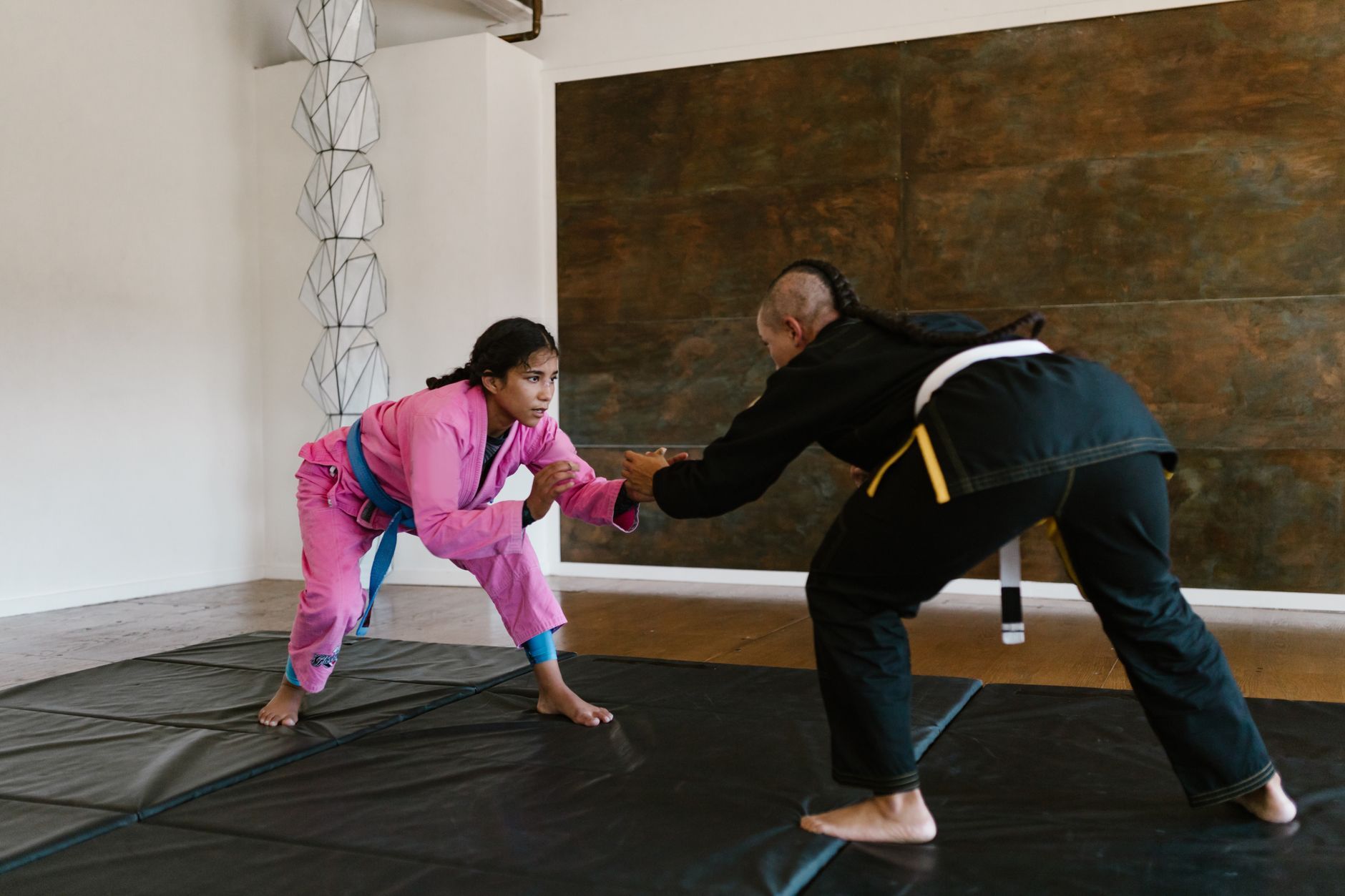
Women’s self-defense classes should focus on realistic scenarios you may face, plus daily habits that help prevent trouble. We teach awareness and avoidance first, then simple, reliable responses for grabs, pushes, and ground situations. On the mats here in Florence, SC, we start beginners with movement and scenario warm-ups before any contact.
What should I learn first in women’s self-defense?
Start with awareness and avoidance, then add simple, high-percentage responses. You learn to read space, spot exits, and set boundaries with your voice before you learn to strike. The goal is to escape fast. We layer movement, then safe contact, then realistic scenarios as you build skill.
Build awareness with small habits. Look up when you walk. Keep one ear free if you use headphones. Notice who is near you at ATMs, gas pumps, and doorways. Park under lights. Hold your phone at chest level when navigating, not down by your waist. Scan for two exits anywhere you sit.
On our mats, we begin with situational footwork. You practice turning, stepping off the line, and creating space with your hands up in a non-threatening stance. Only after that do we add partner drills. This keeps you calm and ready when pressure rises.
Common situations, priority response, and what to drill in class.
| Scenario | Priority response | What to practice |
|---|---|---|
| Wrist grab | Break toward the thumb, create distance | Wrist-escape drills, palm-heel strike, turn and step out |
| Hair or shirt grab while standing | Use strong palm or elbow strikes, step to an angle and use your voice | Paired progressive-resistance drills, break-grab mechanics, boundary commands |
| Push to the ground | Protect head, control distance, technical stand-up to regain feet | Break-fall practice, ground frames and hip escape, technical stand-up repetitions |
| Rear grab from behind | Drop weight, turn to face, strike to vulnerable targets and step out | Coached turn-and-escape sequences, knee strikes, exit footwork |
How can I prevent an attack before it happens?
Prevention comes from situational awareness, fewer distractions, and confident movement. Walk with purpose and your head up. Choose well-lit routes. Avoid isolated paths when you have options. Notice unusual behavior, keep distance, and angle toward exits early. Trust your instincts and leave if something feels off.
Limit distractions. Reduce phone use while walking. Keep volume low if you wear headphones. Carry keys ready before you step outside. Do not sit in a parked car scrolling. If someone closes distance, set a verbal boundary early: “Stop there, I cannot help you.” Step to an angle and move toward people or light.
Use calm language to defuse a request you do not trust. If a person ignores your boundary or grabs you, raise your voice: “Back up,” “Stop,” or “Call the police.” On our scenario warm-ups, we rehearse these choices so the words and footwork are automatic.
What physical moves are most useful for common grabs and pushes?
In class we use simple mechanics that hold up under stress. We teach you to rotate a grabbed wrist toward the attacker’s thumb, the weak point, then step to create space. We use palm-heel strikes to the face, elbow strikes at close range, and knee strikes to the groin or thigh. We do not aim at the chest. Exit as soon as you can.
Principles matter more than force. Target vulnerable areas, move your hips, and change angles. When pulled, sometimes stepping in can unbalance the attacker before you strike and exit. When pushed, drop your base and turn your shoulders to keep balance.
Training basics we follow in class:
- Drill at half speed first, then build to progressive resistance.
- Keep your hands up, elbows in, and your stance under you.
- Use coach supervision, communicate with your partner, and stop if anything feels unsafe. We structure partner drills to repeat these moves safely, then test them in short, realistic scenarios.
What should I practice if I end up on the ground?
Your primary goal on the ground is to protect yourself, create space, and get back to your feet. Use your forearms and shins to frame, keep your head safe, and push the attacker away. Then perform a technical stand-up, which lets you stand while keeping distance for an exit.
In simple terms, technical stand-up means you post on one hand and the opposite foot, keep your other leg as a shield, push your hips back, and stand while facing the threat. If needed, place your foot on the opponent’s hips to manage distance.
Our ground work focuses on escapes and position control, not submissions. You learn to break falls safely, recover guard, hip escape, and stand up fast. We drill balance, core engagement, and calm breathing so you can move under pressure without freezing.
How do Competitive Edge’s Women’s Self Defense classes teach realistic scenarios?
We teach through scenario-based drills in a safe, step-by-step format. Warm-ups and breakfall practice come first. We build contact gradually under coach supervision. You practice verbal boundaries, strikes, and exits in short, realistic rounds. We avoid flashy moves and repeat reliable responses until they stick.
Our team is Brazilian-led under the Sa lineage from Ceara, Brazil. Beginners are welcome on day one, and your first class is free. A typical class flow: mobility warm-up, awareness and movement drills, partner technique, scenario simulation, and a cooldown with Q&A. We keep the tone calm and team-focused.
I like to run scenarios that mirror daily life. Doorway approaches, wrist or hair grabs, a shove near a car door, or a fall to the ground. You learn the same core responses, then you collect reps across different contexts so your plan stays simple under stress.
- Do not assume a technique works after training it once.
- Do not rely only on strength or size to solve a confrontation.
- Do not aim primarily for the chest as a target; choose vulnerable areas instead.
- Do not carry an item solely as a weapon.
- Do not skip warm-ups or safety checks before partner drills.
Train safely
- Stop training and seek medical help if you lose consciousness or have confusion after a hit to the head.
- Stop and see a doctor for visible limb deformity or inability to move a joint normally.
- Stop if you have uncontrolled bleeding, severe pain, persistent numbness, or worsening dizziness.
- Pause training and tell an instructor if you feel faint, short of breath, or unable to continue.
Realistic self-defense is simple, repeatable, and focused on escape. We teach it that way because it holds up under pressure. If you want a safe place to practice with a supportive team, come see us. Message us on WhatsApp to claim your free trial and try our Women’s Self Defense class here in Florence. We will meet you where you are. Bring comfortable clothes, a water bottle, and an open mind. We will handle the rest.
References
- ACE Fitness, training and warm-up guidance - acefitness.org
- NASM, strength and conditioning training standards - nasm.org
- CDC, Physical Activity Basics and safety - cdc.gov
- PubMed, research on self-defense training and empowerment - pubmed.ncbi.nlm.nih.gov
- Brazilian jiu-jitsu overview and terminology - en.wikipedia.org
Published by Competitive Edge Combat Sports, Florence, SC. Last updated October 13, 2026.