Blog · Competitive Edge Combat Sports
The BJJ Belt System Explained: White to Black Belt
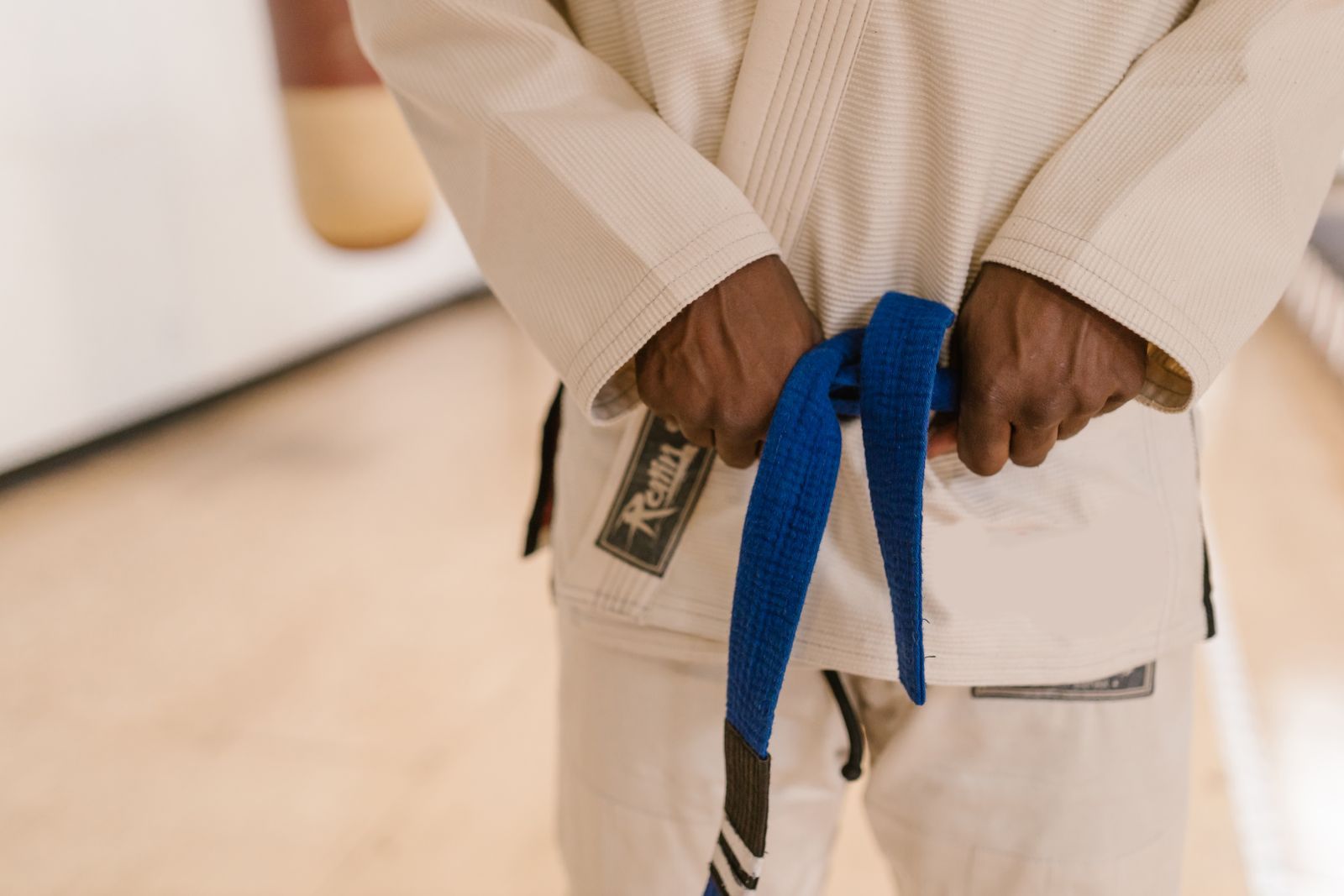
The belt on your waist in Brazilian Jiu-Jitsu is a map of your journey, not a participation award. BJJ is famous for how slowly its ranks move, and that is by design. This guide walks through the belt colors in order, what each rank actually represents, how stripes and promotions work, and roughly how long the path from white to black belt takes.
What are the BJJ belt colors in order?
For adults, the belt order is white, blue, purple, brown, and black. Every practitioner starts at white, and each color that follows marks a real jump in understanding and control on the mat. Unlike some martial arts that hand out new colors quickly, BJJ keeps only five adult belts and takes its time with each one.
There is more above black belt, but it is rare. After many years at black, an instructor can receive a coral belt, red and black or red and white, and at the highest and most senior level of the art, the red belt is reserved for grandmasters. Most people who train will spend their whole journey moving through the five main colors.
What does each belt actually represent?
Each rank is less about a set of moves and more about how completely you understand and can apply the art under pressure. The table below gives a rough picture of what each adult belt tends to represent and the general time people spend at it. These are typical ranges, not promises, since promotion always depends on the individual.
| Belt | What it tends to represent | Rough time at rank |
|---|---|---|
| White | Beginner. Survival, escapes, and core fundamentals | 1 to 2 years |
| Blue | Solid fundamentals and a broad base of technique | 2 to 3 years |
| Purple | Advanced. A personal game starts to take shape | About 1.5 years or more |
| Brown | Refinement and sharper timing, close to expert | About 1 year or more |
| Black | Expert and instructor level command of the art | Many years, and counting |
How do stripes and promotions work?
Between full belt promotions, most gyms mark progress with stripes, usually up to four per belt. A stripe is a small, encouraging checkpoint: it tells you the coach sees steady improvement while you keep working toward the next color. When you have shown enough across the board, the next belt follows.
Promotion itself is not automatic and it is not for sale. It reflects demonstrated skill, mat time, and often how you perform in live training. The IBJJF publishes minimum time-in-grade guidelines, so even a fast learner cannot skip the honest work that each rank asks for. It is also why the gym you train at matters so much; here is how to choose a BJJ gym in Florence.
How long does it take to earn a black belt?
A black belt in Brazilian Jiu-Jitsu usually takes about ten years of consistent training, though the exact timeline depends on how often you train, your consistency, and your body. BJJ is well known for having one of the longest paths to black belt in the martial arts, and that is precisely why the rank carries so much weight.
The point: the slow belt system is a feature, not a flaw. A BJJ black belt is respected because you cannot fake or rush it, only earn it one class at a time.
Are kids belts different from adult belts?
Yes. Children follow a separate belt system with additional colors, such as grey, yellow, orange, and green, spread across different age ranges. This gives younger students meaningful milestones that fit their development, instead of asking a seven year old to chase an adult black belt.
As a young student grows and reaches the right age, they transition into the adult system at blue belt. It is a smooth on-ramp that keeps kids motivated while holding the same core value: rank is earned through real skill and time on the mat.
How does promotion work at Competitive Edge in Florence, SC?
At Competitive Edge Combat Sports in Florence, SC, promotion follows the same honest standard the art is built on. You earn stripes and belts by showing skill and putting in mat time, not by paying for them. Our academy is led by a Brazilian instructor trained under the Sa lineage in Ceara, so students learn ranking the way it was meant to be understood, as a record of ability rather than attendance.
That standard protects you as a student. When you tie on a new belt here, it is because you showed the skill for it, which means the rank on your waist actually reflects what you can do.
Ready to start your own journey?
Every black belt started as a nervous white belt on day one, and the only way to begin is to step on the mat. New to the art? Start with our beginner’s guide to Brazilian Jiu-Jitsu. Your first class at our academy at 111 Technology Place in Florence is free, and beginners are welcome at every level. Learn more about our Brazilian Jiu-Jitsu program, or message us to book your trial.
References
- IBJJF - Minimum Graduation Period - ibjjf.com
- Ranking in Brazilian jiu-jitsu - en.wikipedia.org
- Brazilian jiu-jitsu (overview) - en.wikipedia.org
Published by Competitive Edge Combat Sports, Florence, SC. Last updated August 21, 2026.