Blog · Competitive Edge Combat Sports
A Beginner's Guide to Brazilian Jiu-Jitsu in Florence, SC
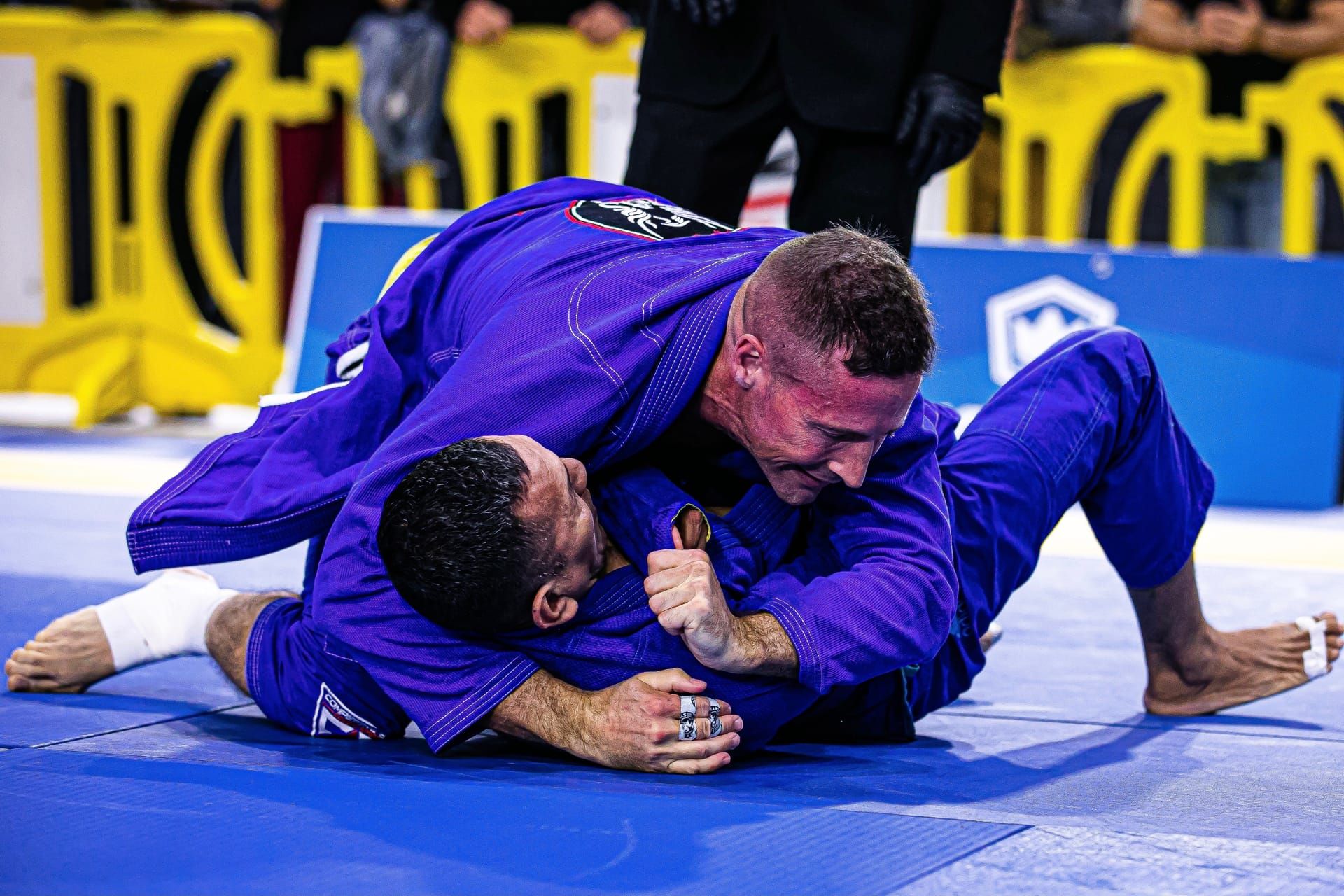
Brazilian Jiu-Jitsu is one of the most beginner-friendly martial arts you can start, because it rewards leverage and technique over size and strength. If you have never trained before, that is the whole point: BJJ was built so a smaller person can control a larger one. This guide walks you through what to expect in your first class in Florence, SC, what to wear, the difference between gi and no-gi, how belts actually work, and how to pick a gym that teaches the real thing.
What is Brazilian Jiu-Jitsu, and why is it good for beginners?
Brazilian Jiu-Jitsu is a grappling martial art focused on ground control and submissions. Its core idea is leverage: a smaller, weaker person can defend against a bigger, stronger opponent using technique and body mechanics instead of raw force. That principle is what makes it welcoming for beginners of any age, size or fitness level.
Train it and you build three things at once: the ability to protect yourself, real physical conditioning, and the calm that comes from solving problems under pressure. It is also the base art of modern MMA and the foundation of practical self-defense, which is why so many people who never planned to compete end up training for life.
What happens in your first BJJ class, and what should you wear?
Expect a warm-up, then technique drilling with a partner at a slow, controlled pace. Good academies do not throw beginners into hard sparring on day one. You drill for a few weeks before you roll at full speed, and even then you go at your own level.
For your first class, keep it simple:
- A fitted t-shirt with sleeves and athletic shorts or leggings, nothing with zippers, buttons or pockets.
- A water bottle and a towel, because you will sweat.
- Trimmed fingernails and toenails, out of respect for your training partners.
- Flip-flops or slides to get on and off the mat.
If the academy offers a loaner gi, you can borrow one. Once you decide to keep training, you will get your own.
Gi or no-gi: which should a beginner start with?
Most beginners start in the gi. The gi is the traditional jacket, pants and belt, and gripping the fabric slows the pace down so you can learn position and control deliberately. No-gi is grip-free, faster, and maps closely to self-defense and MMA. Neither is better, and many students train both once they find their footing.
| Aspect | Gi | No-Gi |
|---|---|---|
| Uniform | Jacket, pants and belt | Rash guard and shorts |
| Pace | Slower, more technical | Faster, more scrambly |
| Grips | Grab the fabric for control | Body and limb control only |
| Best for a beginner | Learning position step by step | Athleticism and self-defense feel |
How does the belt system work?
The adult belt order is white, blue, purple, brown and black. Promotion is based on demonstrated skill and time on the mat, not a fixed calendar, and the IBJJF sets minimum time-in-grade guidelines. A black belt usually takes about ten years of honest training, which is exactly why the rank means something.
At a legitimate gym you cannot buy a belt or skip levels no matter how much you pay. When you earn a stripe, it is because you showed the skill for it. That standard protects you as a student, because it tells you the rank on the mat reflects real ability. For a full breakdown of each belt and how long it takes to earn, see the BJJ belt system explained.
How often should you train, and is BJJ safe for beginners?
Two to three sessions a week is the sweet spot for most beginners: enough repetition to build skill and enough recovery to stay healthy. BJJ is relatively safe when you drill technique before live rolling, tell your partner about any old injuries, and tap early. Some soreness and small bruises are normal while your body adapts, and serious injuries are uncommon with good coaching.
Golden rule: when a submission is locked in, tap early. There is no ego in tapping, it is how everyone trains hard for years and still shows up healthy the next week.
How do you choose a Brazilian Jiu-Jitsu gym in Florence, SC?
Look at who is teaching. A real black belt can tell you who promoted them and trace their lineage back to recognized roots of the art. Ask about credentials, watch a class before you sign anything, and be careful with gyms that promise fast promotions or push long lock-in contracts. We put the full checklist in our guide on how to choose a BJJ gym in Florence.
Competitive Edge Combat Sports is led by a Brazilian instructor trained in Brazil under the Sa lineage in Ceara, graded by a coral-belt professor, son of Master Sa, one of the first people to teach Jiu-Jitsu in the region. Our instructor and students compete and place at national and international level. That is the difference between real progression and a belt mill, and it is the whole reason the academy exists.
Ready to try it? The hardest part is walking through the door the first time. Your first class at our academy at 111 Technology Place in Florence is free, and beginners are welcome from day one. Read more about our Brazilian Jiu-Jitsu program, or message us to book your trial.
References
- IBJJF - Minimum Graduation Period - ibjjf.com
- Brazilian jiu-jitsu (overview) - en.wikipedia.org
- National Library of Medicine - mental health in BJJ athletes - pmc.ncbi.nlm.nih.gov
Published by Competitive Edge Combat Sports, Florence, SC. Last updated August 12, 2026.